
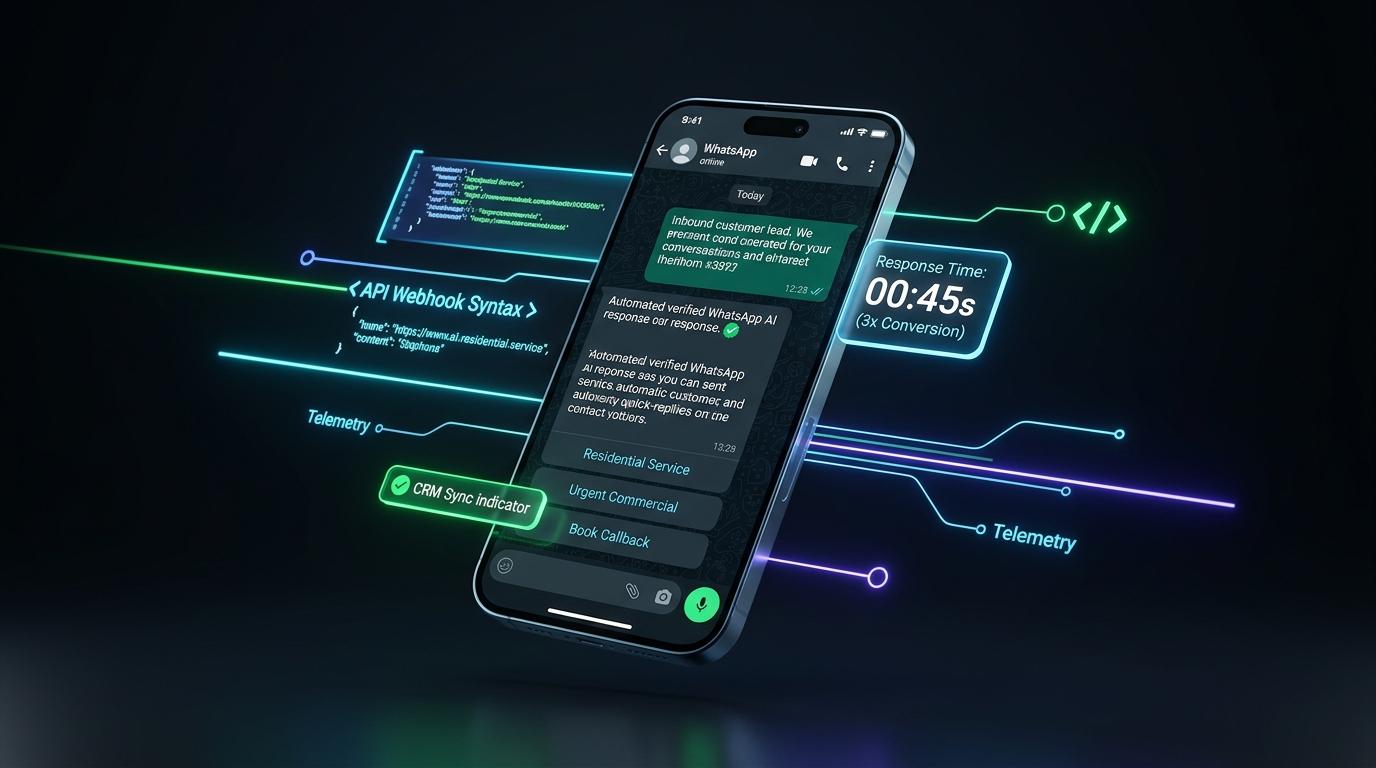
Discover why Indian shop owners are upgrading from the basic WhatsApp Business mobile app to custom Cloud API commerce engines in 2026 to automate sales, live catalog sync, and frictionless UPI checkout.
The Shift from Messaging to WhatsApp Commerce in India
Indian shop owners are no longer merely chatting on WhatsApp — they are orchestrating entire retail operations through it, and the commercial data makes the transition impossible to ignore.
The empirical numbers demonstrate this fundamental shift: WhatsApp Business revenue in India doubled within a single year, while 65% of Indian SMBs report a measurable sales lift after adopting WhatsApp Business tools. In an economy where mobile-first purchasing is the default consumer reflex, these figures reflect an irreversible evolution in transaction architecture — not a temporary marketing fad.
The manual-chat era has officially reached its operational breaking point:
- In 2022, an individual store employee could manually answer inquiries, copy-paste price lists, and visually confirm UPI payment screenshots from a single smartphone.
- By 2026, volume breaks that manual model entirely. A retail enterprise handling 50 to 200 customer inquiries a day cannot scale on human typing speed alone.
- Modern buyers demand instant product catalog browsing, real-time stock verification, automated payment receipts, and immediate courier tracking — not a delayed reply hours later.
WhatsApp commerce is therefore a fundamentally different discipline in 2026. The strategic question is no longer whether to communicate over WhatsApp; it is whether the technical infrastructure powering your WhatsApp channel can scale without human bottlenecks.
Architectural Comparison: Basic App vs. SaaS Aggregators vs. Custom Cloud API
The comparison below outlines the operational boundaries separating the free mobile app, intermediary subscription aggregators, and a self-hosted custom Cloud API commerce engine:
| Operational Metric | Basic WhatsApp Business App | Generic SaaS Chatbot Aggregators | Custom Cloud API Commerce Engine (Cloud Ninja Dev) |
|---|---|---|---|
| Agent Concurrency | Max 4 linked devices; constant session disconnects | Shared inbox; heavy per-agent monthly seat fees | Unlimited simultaneous agents with role-based routing |
| Catalog & Stock Sync | Static in-app catalog; requires manual item-by-item updates | Basic Shopify/WooCommerce sync; rigid schema | Direct PostgreSQL/POS sync; atomic real-time stock locks |
| Checkout & UPI Flow | Manual UPI QR sharing & manual visual bank reconciliation | Redirects buyers to external web browser checkout links | In-chat dynamic UPI deep-links (PhonePe/GPay) & instant webhooks |
| Meta Policy & 24h Window | No automated utility templates; manual messaging only | Proprietary template markup; vendor lock-in | Direct Meta Cloud API utility templates with zero markup |
| Recurring Cost Model | Free, but heavily capped by human labor constraints | Compounding monthly fees + per-conversation SaaS tax | Direct pass-through wholesale Meta API rates; ₹0 SaaS fee |
| Code & Data Custody | Stored on local device hardware; vulnerable to loss | Vendor holds customer database and chat histories | 100% intellectual property & database ownership on your servers |
Why Custom API Solutions Beat Off-the-Shelf SaaS Templates
When Indian retailers ask how to sell on WhatsApp at genuine enterprise volume, the reality is that rigid SaaS subscription templates were never engineered for the real-world complexity of Indian trade.
1. The Rigid Template Ceiling
Pre-packaged chatbot platforms ship with fixed conversation flows, hardcoded product schemas, and brittle integration hooks. A traditional saree merchant managing regional sizing and unstitched fabric variants, an FMCG distributor handling tiered wholesale quantity discounts, or a sweet shop managing festival-rush pre-orders will break through those template limits within days. When you lease off-the-shelf software, your business workflow is forced to contort around the vendor's rigid assumptions.
2. Code Ownership and Balance-Sheet Valuation
When Cloud Ninja Dev deploys a custom custom software and backend automation stack for your storefront, every database schema, API webhook, and conversational decision tree belongs to your company as an owned balance-sheet asset. With rented SaaS platforms, you license access: cancel your subscription, and your entire customer history and automation logic evaporate overnight.
3. Payment Gateway Flexibility
Standard chatbot tools offer a narrow, vendor-dictated selection of payment processors. A custom API integration allows your storefront to route transactions through any combination of financial rails: dynamic UPI intent links (PhonePe, Google Pay, Paytm), Razorpay, Cashfree, or automated ledger credit (khata) terms for wholesale clients — without waiting on a foreign SaaS roadmap.
4. Direct Senior Engineering Support
Generic software aggregators bury technical issues in tier-1 helpdesk queues. Direct access to the dedicated software engineer who architected your codebase means critical bug fixes, seasonal promotion updates, and schema modifications ship within hours instead of weeks.
The Technical Reality of WhatsApp Payments and Catalogs
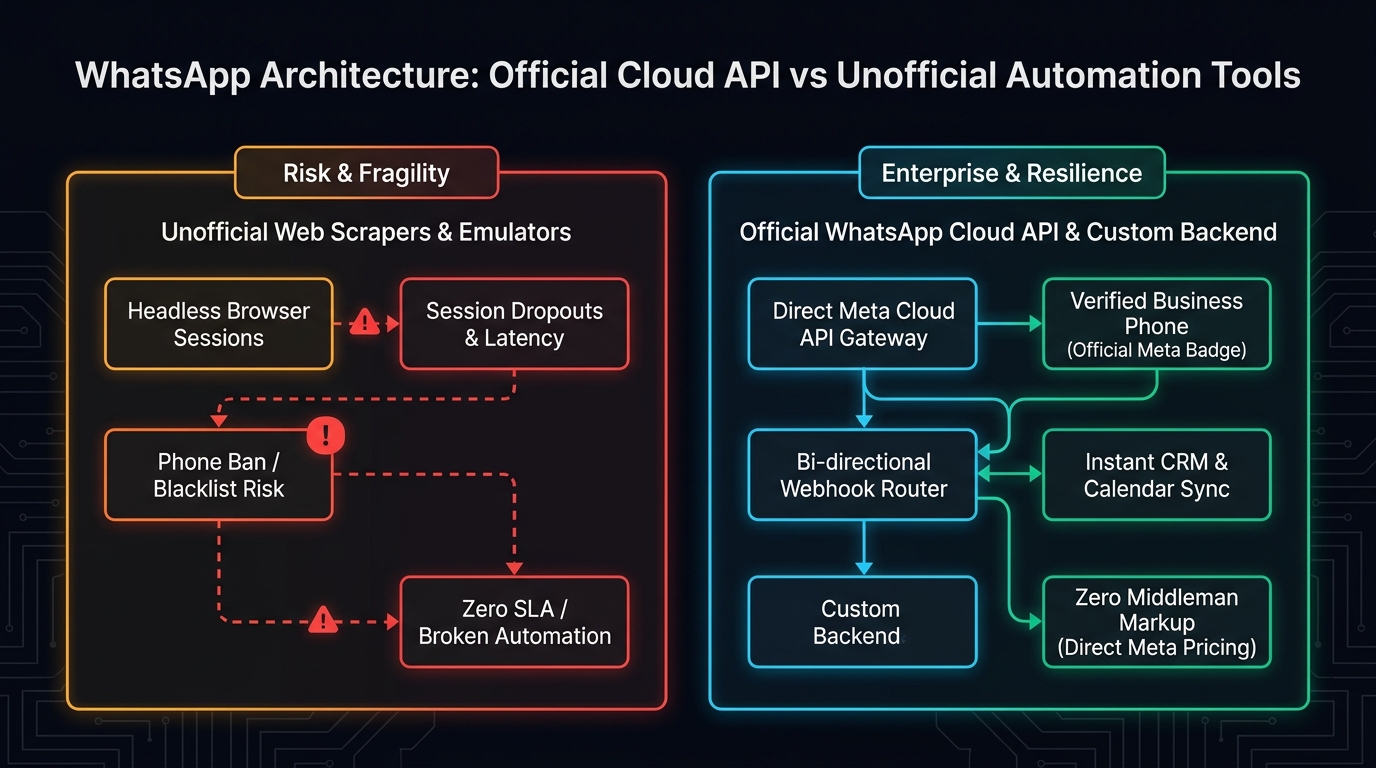
True WhatsApp conversational commerce requires a synchronized architecture that links front-end chat interfaces with back-end enterprise ledgers.
1. In-Chat Native Catalogs vs. Lightweight WebViews
While the basic mobile app restricts shops to static, non-synchronized image cards, the WhatsApp Cloud API supports:
- Interactive Single & Multi-Product Messages: Dynamically generated product sets fetched straight from your master PostgreSQL inventory database, complete with live availability tags.
- Micro-Frontend WebViews: For complex configurations (custom garment tailoring measurements or wholesale bulk tier calculators), WhatsApp lets developers render ultra-fast, lightweight webviews inside the chat window, returning the finalized cart directly to the messaging thread.
2. Dynamic UPI Intent Deep-Linking
Relying on static UPI QR code screenshots introduces massive reconciliation friction: counter clerks must manually match banking app SMS notifications against chat screenshots.
A custom Cloud API backend replaces this with Dynamic UPI Intent Deep-Links:
- When a buyer confirms their cart, the server generates a unique transaction reference with the exact rupee amount.
- Clicking "Pay via UPI" launches Google Pay, PhonePe, or Paytm with pre-filled billing details.
- Upon payment completion, the gateway's server-to-server webhook hits your Cloud API engine within 500ms, automatically transitioning the order status to PAID, alerting the dispatch team, and printing an on-counter thermal invoice.
3. Automated GST Invoice PDF Generation
Immediately upon payment reconciliation, the custom engine compiles an official, GST-compliant tax invoice PDF (complete with HSN codes, SAC breakdowns, and QR code verification) and transmits it back to the customer's WhatsApp thread as a downloadable document — delivering enterprise-grade purchasing convenience.
Navigating the 2026 Pricing and Service Message Rules
The pricing mechanics behind the WhatsApp Business Cloud API are where many business owners discover, too late, that an unmonitored account can quietly halt customer deliveries at critical moments.
1. Service Message Quotas & Direct Billing
Meta provides a monthly allowance of free customer service conversations. Once that threshold is consumed, outbound replies to customer-initiated queries incur per-conversation fees at official wholesale rates. Under Meta's 2026 billing regulations, accounts without an active, verified payment method on file will have outbound service messages blocked immediately rather than queued. Implementing automated balance monitoring and low-balance webhook alerts ensures seamless, uninterrupted communications.
2. The 24-Hour Customer Service Session Window
A customer's incoming message opens a 24-hour service window during which your automated bot and human agents can exchange free-form conversational messages without template restrictions.
Once that 24-hour boundary closes, outbound messaging requires a Meta-approved Message Template (categorized as Utility, Authentication, or Marketing). A custom-built backend actively tracks session expiry timestamps in Redis or PostgreSQL, automatically switching from free-form chat to compliant utility templates when sending subsequent shipping notifications or delivery updates. This prevents costly template rejections and keeps messaging costs strictly controlled.
Migration Safety: Moving from the Mobile App to the Cloud API
For growing retailers, migrating an existing business phone number from the standard mobile app to the WhatsApp Cloud API is a high-stakes architectural step that requires deliberate execution.
- API Registration is Permanent: Once a telephone number is registered with the WhatsApp Cloud API, it can no longer run the consumer WhatsApp or WhatsApp Business mobile app on a physical smartphone. All communications must flow through API webhooks and connected multi-agent inboxes.
- Chat History Safeguarding: Historical chat threads stored on a local phone do not automatically transfer into Cloud API databases. Prior to cutover, your team must perform a full native encrypted archive export to preserve legacy client notes and historical transaction logs.
- Controlled Canary Rollouts: Rather than cutting over 100% of customer traffic overnight, professional migrations follow a phased canary strategy over 14 days — validating webhook latency, testing dynamic UPI callbacks with internal test orders, and training counter staff on the multi-agent console before decommissioning the old mobile handset.
14-Day Production Migration Sprint Roadmap
Transitioning your storefront to a resilient, custom-engineered Cloud API infrastructure follows an agile two-week delivery lifecycle:
| Sprint Window | Engineering Milestones & Deliverables | Operational Impact for Store Owners |
|---|---|---|
| Days 1–3: Audit & Provisioning | Export local chat archives, verify Meta Business Manager, and provision official WhatsApp Cloud API phone numbers | Official Meta business verification completed with zero risk of legacy data loss |
| Days 4–7: Webhook & Catalog Sync | Build Node.js/Go webhook router, connect master inventory database, and deploy conversational catalog flows | Real-time interactive product cards live with automated stock reservation |
| Days 8–10: Payment & ERP Wiring | Integrate dynamic UPI deep-linking (PhonePe/Razorpay), automated thermal POS print daemon, and PDF invoice engine | In-chat checkout operational with sub-second payment reconciliation |
| Days 11–12: Meta Utility Templates | Submit utility message templates for order confirmations, packing alerts, and live delivery partner tracking | Full 24-hour compliance unlocked for post-purchase fulfillment updates |
| Days 13–14: Canary Testing & Launch | Real-world load testing, multi-agent console onboarding, edge-case validation, and full production traffic cutover | Store running autonomously 24/7; zero manual mobile phone typing required |
Frequently Asked Questions
Will my shop lose its existing WhatsApp phone number during Cloud API migration?
No. Your existing business telephone number can be ported directly to the WhatsApp Cloud API. However, prior to cutover, you must delete the WhatsApp account from the mobile device to release the number for enterprise API hosting.
Can multiple employees handle customer chats at the same time?
Yes. Unlike the basic WhatsApp Business app which limits linked devices and frequently disconnects, a custom Cloud API engine connects to a centralized multi-agent dashboard, allowing 5, 20, or 50 customer service reps to handle simultaneous conversations with role-based routing and internal collision detection.
How does in-chat dynamic UPI checkout prevent payment fraud?
Instead of relying on customers to manually upload bank screenshots (which can be doctored), the custom engine generates a unique transaction reference and verifies payments directly via cryptographic server-to-server webhooks from the payment gateway before confirming any order.
Why is direct Cloud API integration cheaper than third-party SaaS chatbots?
Third-party chatbot aggregators charge monthly subscription fees, mark up official Meta conversation fees, and impose artificial contact limits. By connecting directly to the Meta Cloud API via AI automation solutions, your business pays only the wholesale API rate with zero monthly intermediary fees.
What happens if our shop internet drops during an active order?
The Cloud API runs on high-availability cloud servers (AWS/Cloudflare). If your local counter internet drops, incoming customer orders and payments continue to be processed and queued safely in the cloud database. The moment counter connectivity restores, the local POS terminal synchronizes and prints pending order slips automatically.
Scale Your WhatsApp Commerce Engine
Continuing to operate high-velocity retail through a single mobile smartphone caps your daily revenue at the physical typing capacity of your staff. Renting generic SaaS aggregators subjects your business to compounding monthly fees and rigid template limitations.
A custom-engineered WhatsApp Cloud API commerce engine equips your business with a 24/7 digital storefront that accepts orders, synchronizes stock in real time, and collects automated UPI payments — all on infrastructure you own 100%.
Explore our custom software and automation services and AI automation solutions to see real enterprise architectures. Review our transparent development process, or contact Cloud Ninja Dev today to schedule your technical WhatsApp Commerce Audit.